
Snake charmers, carpet vendors, and veiled women may conjure up ideas of the Middle East, North Africa, and West Asia, but they are also partially indebted to Orientalist fantasies. To understand these images, we have to understand the concept of Orientalism, beginning with the word “Orient” itself.
We understand now that this designation reflects a Western European view of the “East,” and not necessarily the views of the inhabitants of these areas. We also realize today that the label of the “Orient” hardly captures the wide swath of territory to which it originally referred: The Middle East, North Africa, and Asia. These are at once distinct, contrasting, and yet interconnected regions. The reason we study the topic of Orientalism, or why it is of importance to us, is that it is a view of the past that could help us understand/affect our contemporary views. Though we would like to think that Orientalism has vanished, it still exists in many forms today. We see it in the way Westerner’s sing their songs, write their books, or simply speak of the Middle East. Thus, we care to discuss it here today.
To begin with, our team met with Dr. Jarkas online to get an idea of how we should organize and layout this project. We created a copy of the master spreadsheet that will be used to analyze and interpret data; it is organized in a sense to include the author’s names, nationality, title of work, text category, author category and the date of publication. Palladio is a great platform for this project for it is typically used as a visual organizer. It allows us to create different maps for different relationships, necessary for our data collection. It requires the use of an excel spreadsheet to assemble all the information prior to our presentation. Palladio can help us delve into the complex relationships between the information inserted in the different categories.

Image Source
Next, we decided to list a few research questions in order to pinpoint which aspects we will focus one when analyzing the data from the spreadsheets on palladio. This step is vital to our project because it forms a timeline for us highlighting the different categories we will analyze using the bivariate analysis form. The first research question we picked was a general and broad one, What major findings do we get when mapping the Orientalists. We chose this research question in order to pick up an analysis from our first instinct when we open up the map on palladio. Here, we jotted down all the different and not necessarily correlated analysis we picked up on without deeply looking into the different categories and comparing them to one another.
After completing this step, we decided to focus on the four columns in the spreadsheet that had the possibility of common cells. The three columns were authors nationality, text category, authors category, and date of publication. Making this important decision helped us move a step closer in our project and led us to coming up with research questions that best suited the type of data we were dealing with.
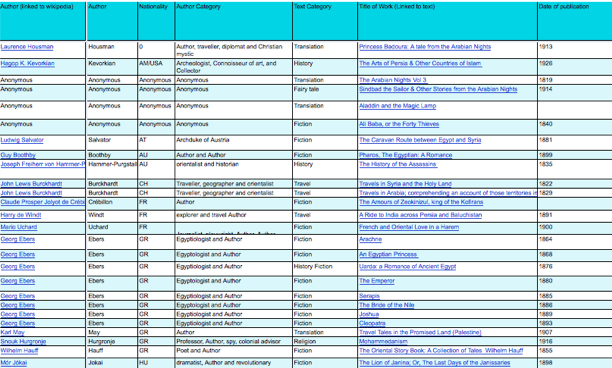
Spreadsheet Source
Some of the research questions were “Is there a relation between the author’s nationality and text category?” , “Which dates of publication are most dominant with each text category?”, and we ended our research questions with an analysis of three columns that may show a relation between each other “Is there a correlation between author’s nationality, text category, and author’s category?”.
Once we prepared our research questions, we began with the following step, observing our networks on Palladio. The first research question we analyzed was the relation between the authors nationality and the text category. Here, we noticed a few vital things that can help us in our research for the project. One being that the most dominant orientalist author nationality is British. The British authors mostly focused on writing fictional work, translation, and travel. They barely wrote about history, religion or the military. The American orientalist authors, on the other hand, mainly focused on fictional writings, and barely wrote about children literature, travel, or religion. We also observed that only three French orientalist authors are available in our data. Two of them focused on writing about fiction while the remaining authors wrote about travel.
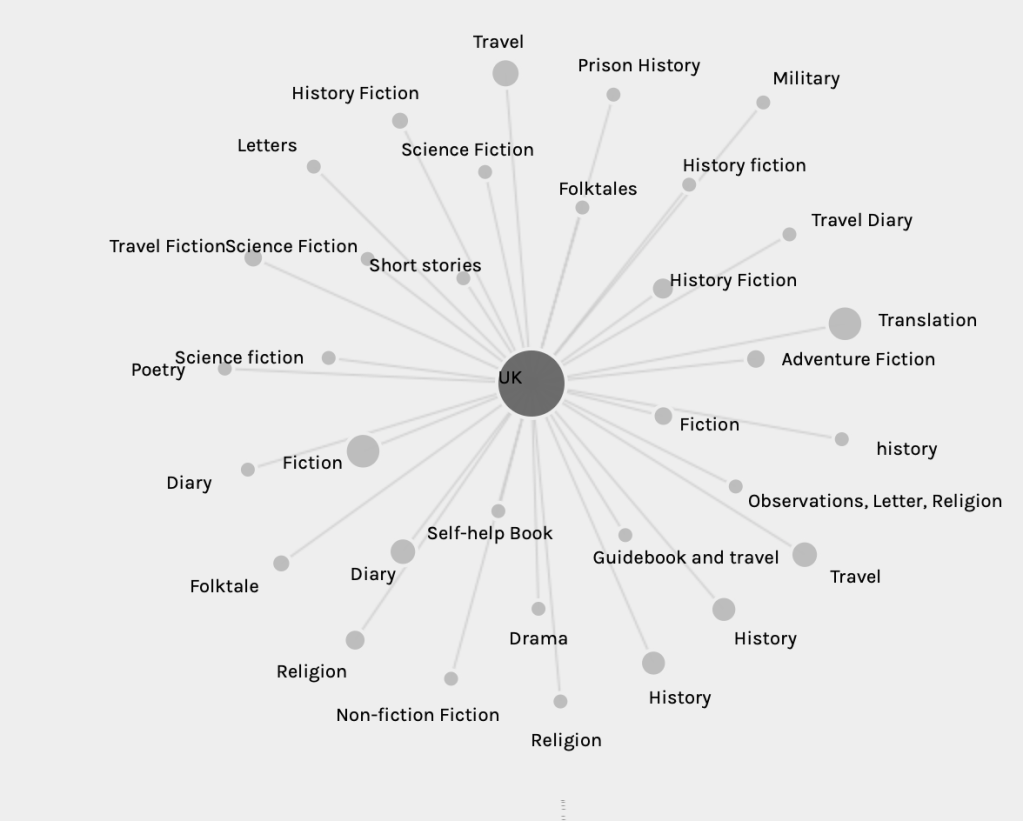
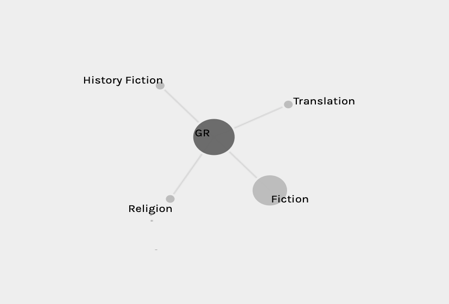
Another observation was that German orientalists mainly focused on writing fiction, and only a few authors wrote about religion or translation. Lastly, Multinational orientalists focused on writing both fiction and history fiction, they barely wrote about history or travel. Our final and most important analysis was that almost all orientalists wrote about fiction and a large number of the authors were either British or American.
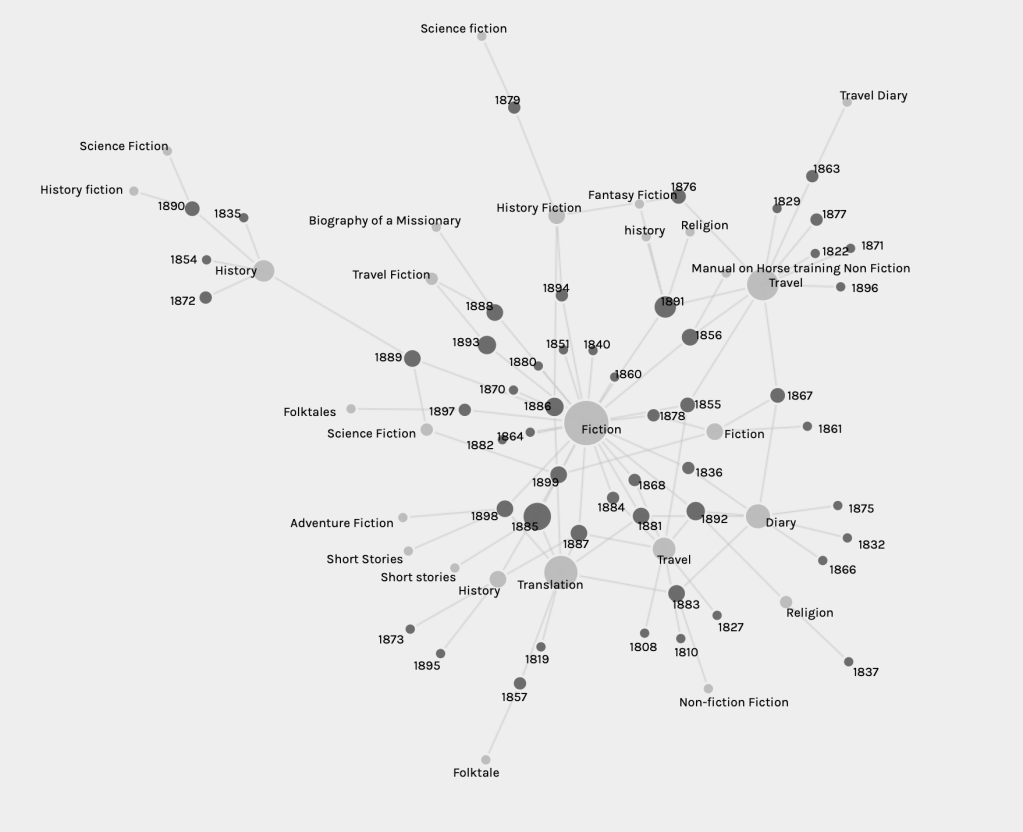
The second research questionwe analysed was the relation between the publication dates and the text categories. For this research question, we decided to group the different publication dates into centuries; in order to study the most and least frequent text categories written by orientalists over the years. During the 18thcentury, barely any orientalists published their work; however, those who did were very few. Orientalist authors only wrote about fiction and travel during this century. Nevertheless, we saw that they flourished during the 19thcentury. Their work was mostly fictional; however, they also wrote about travel, translation, and history.The 20th century was a bit similar to the prior one. During the 20th century, Orientalist authors mainly focused on fictional writings, but they also wrote about travel, religion, history. In our current century, the 21st century, orientalism is still relevant; however, we noticed a significant drop in the work published during this century.
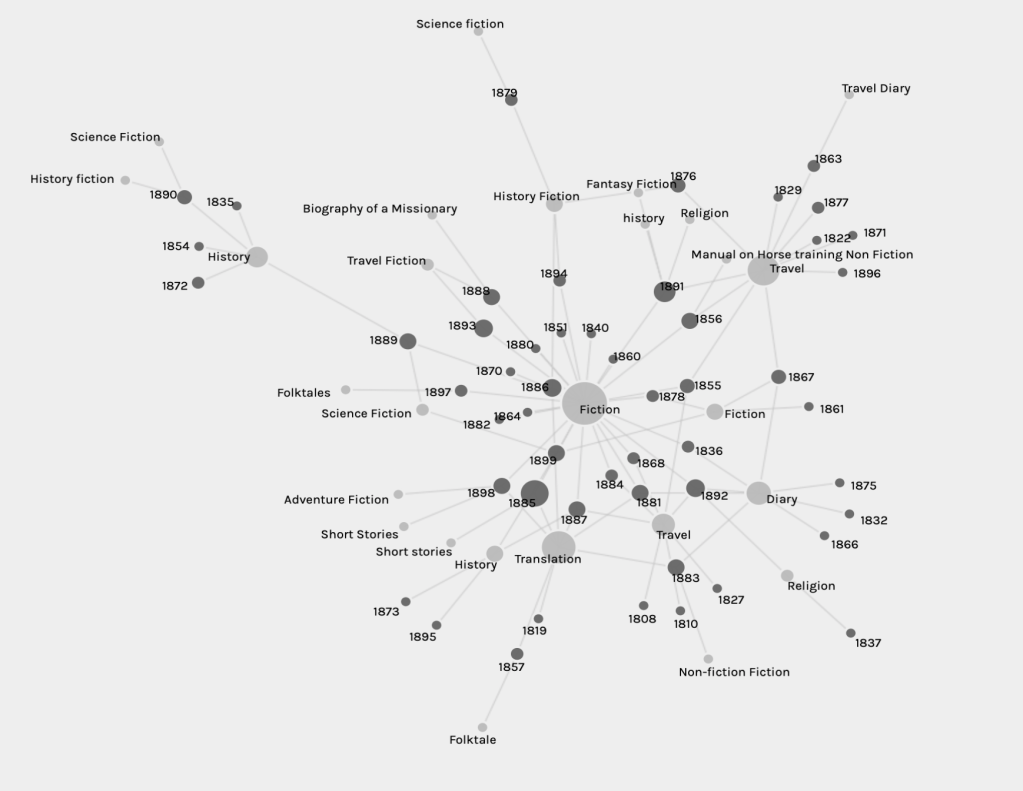
With the help of our data, we were able to observe only two works related to history published in 2007 and in 2015. Therefore, not much orientalist work is being published at our time due to the evolution of the digital world.
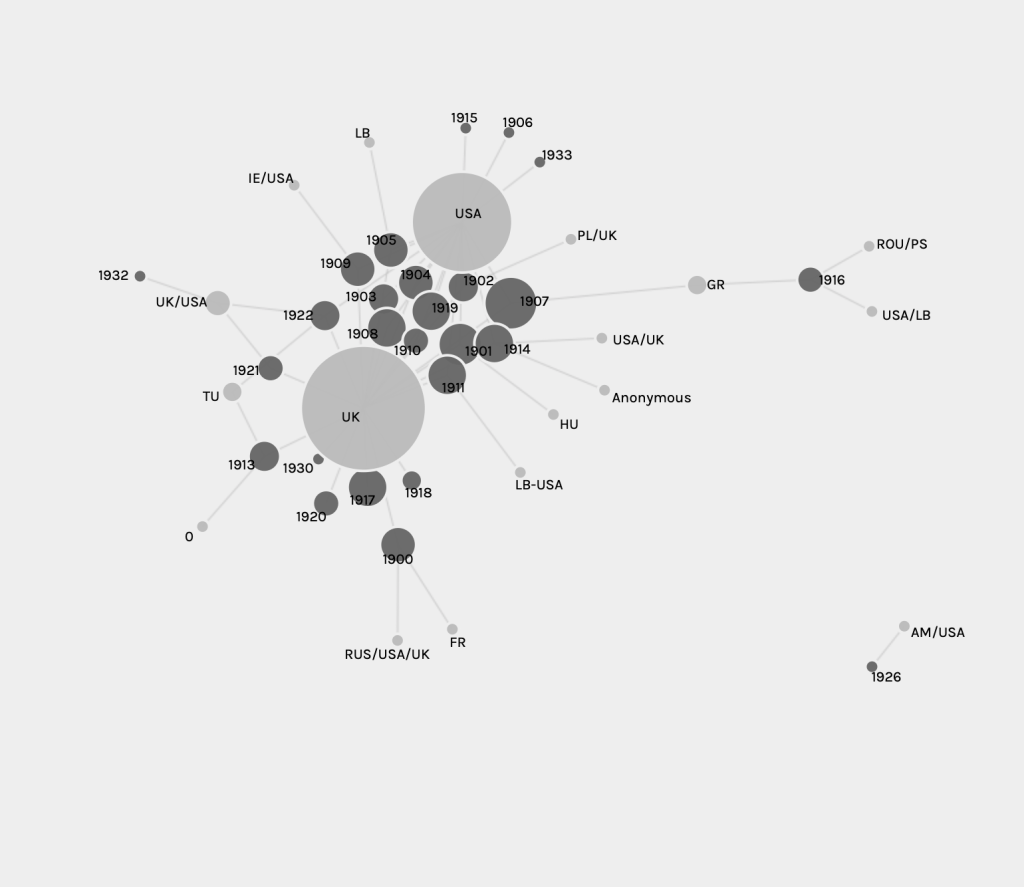
Lastly, we analyzed the relation between the publication dates and authors nationality. Like the previous research question analysis, we grouped the different publication dates into centuries. During the 18th century, the predominant orientalist authors were mainly from the United Kingdom. Based on the data, there was no presence of any other nationality during this period.
Whereas during the 19th century, the orientalist publications flourished. Many nationalities joined the United Kingdom, among them were authors from the United States and Germany. In addition, there were other nationalities that had a minor presence such as France, Syria and Lebanon.
In the 20th century, the orientalists from the United Kingdom were still leading in terms of the author’s nationality. In addition, the number of the United States publications increased. Other nationalities like Russia, Hungary, Tunisia and Lebanon had a minor presence during this period. Unfortunately, in the century we live in, the number of publications has dropped significantly. With a presence limited to orientalists from the United Kingdom and Romania.
Last but not least, the integration of Palladio technology in our analysis seemed to be very beneficial allowing us to visually display the relationships between the data categories. The visual interpretation of data made the analysis of the data smoother and more efficient as we were able to highlight the contribution of the orientalists based on their nationalities, the genre they wrote about, and the year of publication. Therefore, this project helped us understand the concept of orientalist authors further as well as how they evolved. We noticed that the concept of orientalism is still with us; however, the orientalism of today is not quite the same as the orientalism discussed in the past.
References:
 Houssam's Blog